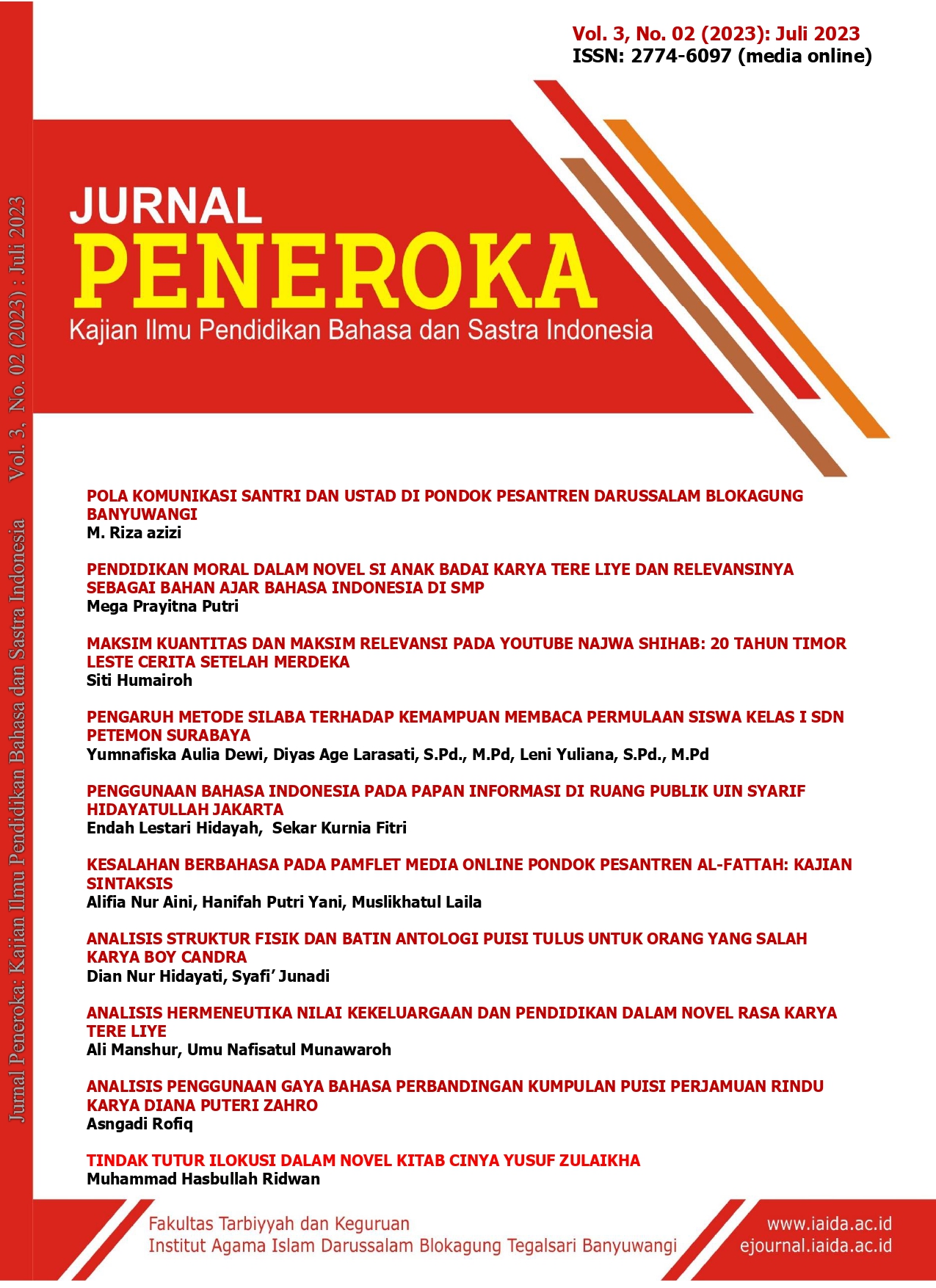
POLA KOMUNIKASI SANTRI DAN USTAD DI PONDOK PESANTREN DARUSSALAM BLOKAGUNG BANYUWANGI
DOI:
https://doi.org/10.30739/peneroka.v3i2.2292Keywords:
Kata Kunci : pola komunikasi, santri, ustadAbstract
This study aims to explain the communication patterns of students and teachers in Islamic boarding schools. The data of this study are the conversations of students and religious teachers which indicate several types of communication patterns in them. The source of this research data is the conversations of students at the Darussalam Blokagung Islamic Boarding School. Data collection was carried out by means of recording techniques, observations, and interviews. After the data is collected, the data is then described and then analyzed according to the communication patterns that occur in the students and teachers at Darussalam Blokagung Islamic Boarding School using the Hymes communication pattern theory known as SPEAKING, so that researchers can explain the communication patterns that occur. The last is the interpretation stage, drawing conclusions from the data that has been analyzed. The results of the analysis show that the pattern of communication between the teacher and the students indicates a pattern of advising and commanding. In communicating, the teacher tends to be more flexible in speaking, because he is the dominating character in the conversation. This is because the teacher is in a position of higher social status than the student. Then the communication of the student to the teacher is that the student always starts and closes the conversation with greetings and speaks while bowing his head slightly every time he talks with the teacher.
Downloads
References
Anggriawan, F. (2017). Gaya Komunikasi Pimpinan Terhadap Motivasi Kerja Karyawan pada PT. Perusahaan Listrik Samarinda. EJournal Ilmu Komunikasi, 5(4), 260–274.
Anggraini, E. S., & Utara, S. (2021). Pola Komunikasi Guru Dalam Pembelajaran Anak Usia Dini Melalui Bermain. Jurnal Bunga Rampai, 7(1), 27–37.
Ayuningtyas, F., Venus, A., Suryana, A., & Yustikasari. (2020). Pola Komunikasi Insan Berkemampuan Khusus: Studi Etnografi Komunikasi pada Interaksi Sosial Insan Berkemampuan Khusus di Rumah Autis Cabang Depok. Ekspresi Dan Persepsi?: Jurnal Ilmu Komunikasi, 3(2), 98–109.
Fadillah, G., & Kartika, D. (2021). Analisis Campur Kode pada Album Timeless Begins oleh Cross Gene. Jurnal Kata?: Penelitian Tentang Ilmu Bahasa Dan Sastra, 5(1), 171–178.
Ghaffar, A. A., Haryono, A., & Tallapessy, A. (2021). Pola Komunikasi Kyai dan Santri di Pondok Pesantren At-Taufiq Wringin Bondowoso. KREDO?: Jurnal Ilmiah Bahasa Dan Sastra, 4(2), 594–610.
Haryono, A. (2015). Etnografi Komunikasi?: Konsep, Metode, dan Contoh Penelitian Pola Komunikasi. Jember: UPT Penerbitan UNEJ.
Hidayat, M. (2013). Model Komunikasi Kyai dengan Santri di Pesantren. Jurnal Komunikasi ASPIKOM, 2(6), 385–395.
Nurhayati, A., & Hasanah R. M. (2023). Pemilihan Kode Tutur dalam Interaksi Sosial pada Santri Putri Asrama Al-Aisyah Pondok Pesantren Darussalam Blokagung Banyuwangi. PENEROKA : Jurnal Kajian Ilmu Pendidikan Bahasa dan Sastra Indonesia, 3(1), 50-64
Ramdan, A., & Usman, M. (2021). Pola Interaksi dan Komunikasi Kyai terhadap Santri di Pesantren Sirnarasa. Jurnal STID Sirnarasa, 3, 56–85.
Anggraini, E. S., & Utara, S. (2021). Pola Komunikasi Guru Dalam Pembelajaran Anak Usia Dini Melalui Bermain. Jurnal Bunga Rampai, 7(1), 27–37.
Setiawan, K. E. P., Arwansyah, Y. B., & Sumarlam. (2022). Analisis Wacana Kritis Berita Daerah Ngawi dalam Media Daring radarmadiun.co.id Edisi Oktober 2021. Jurnal Sastra Indonesia, 11(2), 92–99.
Wijayanti, A. Y., Puspitasari, N. (2018). Analisis pola komunikasi antarbudaya para santri di pondok pesantren tahfidz daarul quran jawa tengah. 5(2).
Downloads
Published
How to Cite
Issue
Section
Citation Check
License
Copyright (c) 2023 M. Riza Azizi

This work is licensed under a Creative Commons Attribution-ShareAlike 4.0 International License.
Authors who publish in Jurnal PENEROKA: Kajian Ilmu Pendidikan Bahasa dan Sastra Indonesia agree to the following terms:
- Authors retain copyright and grant the journal right of first publication with the work simultaneously licensed under a Attribution-ShareAlike 4.0 International (CC BY-SA 4.0) License that allows others to share the work with an acknowledgment of the work's authorship and initial publication in this journal.
- Authors are able to enter into separate, additional contractual arrangements for the non-exclusive distribution of the journal's published version of the work (e.g., post it to an institutional repository or publish it in a book), with an acknowledgment of its initial publication in this journal.
- Authors are permitted and encouraged to post their work online (e.g., in institutional repositories or on their website) prior to and during the submission process, as it can lead to productive exchanges, as well as earlier and greater citation of published work (See The Effect of Open Access).