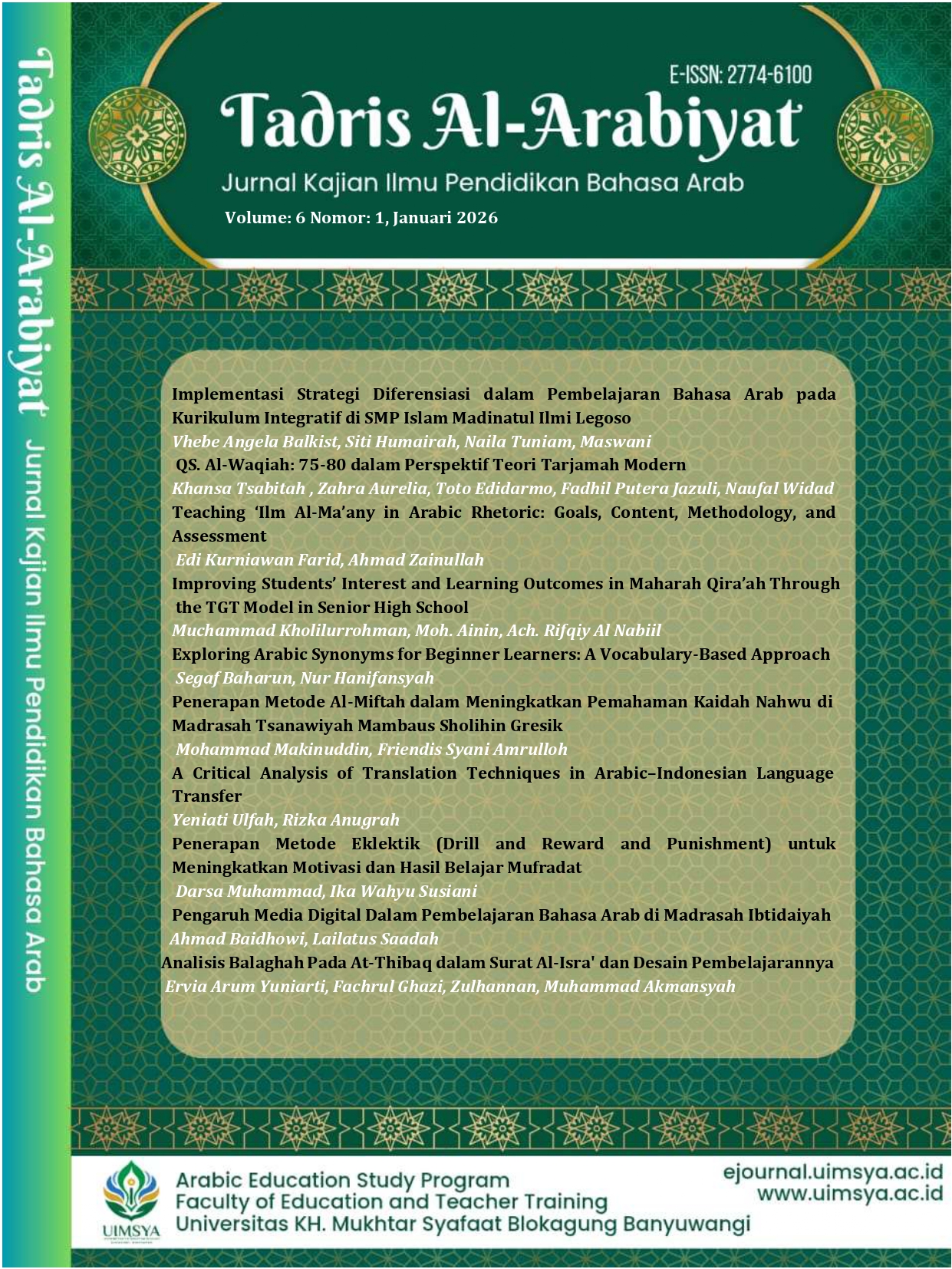
ANALISIS BALAGHAH PADA AT-THIBAQ DALAM SURAT AL-ISRA' DAN DESAIN PEMBELAJARANNYA
DOI:
https://doi.org/10.30739/arabiyat.v6i1.5012Keywords:
Balaghah, At-tibaq, Bad?‘ Science, Surah Al-Isra', Learning DesignAbstract
Balaghah is the science that discusses how to convey meaning accurately and beautifully, while at-tibaq in the science of bad?‘ is a style of language that emphasizes the contrast between two opposing meanings in a text, including in the verses of Surat Al-Isra’. This is the key to understanding the depth of meaning and beauty of the language of the Qur’an, but it is rarely used systematically as the basis for learning design. Therefore, this study aims to analyze the form and function of at-tibaq in Surah Al-Isra' and formulate a text-based Balaghah learning design and case method. The method used is a qualitative approach in the form of a literature study, with the main data being verses from Surah Al-Isra' that contain at-tibaq and related scientific articles, analyzed through content analysis. The results of this study show that there are several types of at-tibaq (contradictions in meaning between verses, within a phrase, within a sentence, and in semantic roles) that serve to emphasize dichotomies of meaning, clarify moral consequences, and strengthen the persuasive, emotional, and aesthetic power of the text. The contribution to the development of Balaghah learning is evident when the verses of Al-Isra' are used as the main case for analysis, arranged in a step-by-step module, and enriched with lesson plan design tasks so that Balaghah material is easier to understand and closer to the learning experience.
Downloads
References
Aflisia, N., Hendrianto, & Kasmantoni. (2021). Teaching Balaghah for the Purpose of Appreciation of Al-Quran Language. Lughawiyy?t: Jurnal Pendidikan Bahasa Dan Sastra Arab, 4(2), 156–172.
Al-fadhil, A. F., Sauqi, B. I., Syam, M. A. M., Yasin, M. A., & Akmaliyah. (2025). Analisis Gaya Bahasa Qashr dalam Q.S Al-An’am: Kajian Ilmu Balaghah. Deiktis: Jurnal Pendidikan Bahasa Dan Sastra, 5(4), 5892–5900.
Alamin, F., & Sopian, A. (2024). Wacana Filsafat Ilmu Balaghah: Kajian Ontologi, Epistemologi dan Aksiologi. Rayah Al-Islam: Jurnal Ilmu Islam, 8(1), 131–142. https://doi.org/10.37274/rais.v8i1.906
Amalia, I., & Komarudin, R. E. (2023). Sejarah Perkembangan dan Cakupan Ilmu Balaghah Al-Qur’an dalam Kitab Durus fi Ilmi Balaghah Karya Syeikh Muayyin Daqiq Al-Amili. Madani: Jurnal Ilmiah Multidisiplin, 1(5), 241–249. https://doi.org/https://doi.org/10.5281/zenodo.8010135
Anisah, S., & Ramadhan, F. (2024). Analysis of Ontology, Epistemology, and Axiology of Balaghah Science In Arabic (A Study of Philosophy of Science). International Journal of Indonesian Philosophy & Theology, 5(1), 30–37. https://doi.org/10.47043/ijipth.v5i1.70
Armita, P., & Saad, M. F. M. (2025). The Structure and Function of Balaghah in the Qur’an: A Conceptual Analysis Based on Arabic Linguistics. Al-Vadaukas: Journal of Education and Islamic Studies, 1(1), 44–53.
Arnita, Alia, N., & Rahmah, W. P. (2024). At-Thiqab dalam Al-Qur’an Surah Az-Zumar (Kajian Ilmu Badi’). Al-Muallaqat: Journal of Arabic Studies, 3(2), 19–27.
Awadin, A. P., Zuhdi, A., Kafiyah, F. N., Sutardi, E., & Komarudin, E. (2025). Epistemologi Ilmu Balaghah Dalam Al-Qur’an. Lahjah Arabiyah: Jurnal Bahasa Arab Dan Pendidikan Bahasa Arab, 6(1), 87–102. https://doi.org/10.35316/lahjah.v6i1.87-102
Azis, A., Umyanah, Y., & Mukhtar, H. (2025). Keindahan Retorika dalam Al-Qur’an: Analisis Balaghah dalam Ayat-ayat Persuasif. Uktub:Journal of Arabic Studies, 5(1), 39–57.
Aziz, M. A., & Komarudin, R. E. (2023). Al-Muhassinat Al-Ma’nawiyah dalam Al-Qur’an: Fenomena Ath-Thibaq dalam Surat Isra’. Definisi: Jurnal Agama Dan Sosial-Humaniora, 2(3), 145–150. https://doi.org/https://doi.org/10.1557/djash.v2i3.31260
Bahri, R. B. H., & Damhuri. (2023). Pengaruh Penggunaan Buku Ajar Ilmu Balaghah Berbasis Hadis Qudsi terhadap Peningkatan Pemahaman Ilmu Balaghah Mahasiswa PBA IAIN Sultan Amai Gorontalo. Jurnal Al-Kalim: Jurnal Pendidikan Bahasa Arab Dan Kebahasaaraban, 2(2), 217–224. https://doi.org/https://doi.org/10.60040/jak.v2i2.101
Dinarianti, Amanda, R., & Henra. (2023). At-Thiqab dalam Surah Al-Fath (Studi Analisis Balaghah). Al-Muallaqat: Journal of Arabic Studies, 3(1), 16–27.
Fitria, H. S., & Kamaliah, N. (2025). Saja’ in Surah Al-Adiyat: A Balaghah Analysis. Tanzil: Jurnal Studi Al-Qur’an, 7(2), 177–192. https://doi.org/https://doi.org/10.20871/10.20871/tjsq.v7i2.395
Hidayah, S. N., & Humaira, A. Y. (2025). Kajian Ilmu Balaghah: Perkembangan Ilmu Balaghah dan Landasan Teori dalam Meningkatkan Pemahaman Bahasa Arab. Journal of Comprehensive Science, 1(1), 1–12.
Ihsanudin. (2020). Fenomena Ath-Thibaq dalam Surat Al-Israa’: Kajian Ilmu Badi’. Mahakarya: Jurnal Mahasiswa Ilmu Budaya, 1(2), 17–28.
Khairani, I., Suryani, M. W., & Al-rasyid, H. (2025). Analisis Mura’ah An-Nadzir: Penerapan Ilmu Badi’ dalam Ayat Al-Qur’an. Jurnal Miftahul Ilmi: Jurnal Pendidikan Agama Islam, 2(1), 30–38.
Khotimah, M. H., Wandana, N., Hasibuan, N. H., & Al-Rasyid, H. (2024). Analysis of The Use of Al-Uslub Al-Hakim and Al-Salb Wa Al-Ijab in Surah Al-Imran. Recoms: Jurnal Penelitian Dan Pengabdian, 1(1), 58–71. https://doi.org/10.59548/rc.v1i1.308
L, W. F., & Dalimunthe, N. Z. (2024). Analisis Ayat-Ayat Muthabaqah Pada Surah Al-Furqan Ayat 1-70. JIIC: Jurnal Intelek Insan Cendikia, 1(10), 7109–7119.
Nastiar, M. A. (2023). Unsur Balaghah dalam Surah Al-Qari’ah (Telaah Kitab Shafwah al-Tafasir). Jurnal Ilmu Agama –, 24(1), 1–19. https://doi.org/https://doi.org/10.19109/jia
Noruddin, N., Wahid, N. A., Sulaiman, R. H. R., & Awang, N. A. (2022). Analisis Balaghah Tentang Ayat-Ayat Al-Maradh dalam Al-Qur’an [The Analysis of Balaghah on al-Maradh Verses in the Qur’an]. Jurnal Islam Dan Masyarakat Kontemporari, 23(2), 1–13. https://doi.org/https://doi.org/10.37231/jimk.2022.23.2.634
Rahman, M. S. A., Daoh, M., Ghazali, A. R., Ismail, M. R., Pisol, M. I. M., & Salahuddin, N. (2021). Keberkesanan Modul Pembelajaran Subjek Balaghah di Institusi Pengajian Tinggi Awam Malaysia. International Journal of Humanities, Philosophy and Language, 4(14), 1–15. https://doi.org/10.35631/IJHPL.414001
Riki, Mu’minun, N., & Musdalipa. (2024). Saja’ dalam Al-Qur’an Surah Al-Muthaffifin. Al-Muallaqat: Journal of Arabic Studies, 3(2), 12–18.
Rohman, A., & Taufiq, W. (2022). Ilmu Ma’ani dan Peranannya dalam Tafsir (Îjâz, Ithnâb dan Musâwah dalam Al-Qurân). Al-Fanar: Jurnal Ilmu Al-Qur’an Dan Tafsir, 5(1), 84–101. https://doi.org/10.33511/alfanar.v5n1.84-101
Rois, I. N. (2021). Pemanfaatan E-Learning Sebagai Media Pembelajaran Pada Mata Kuliah Balaghah At-Tathbiqiyyah di STAI Masjid Syuhada Yogyakarta. Ihtimam: Jurnal Pendidikan Bahasa Arab, 04(01), 20–30.
Shabriyah, N. S., & Nuruddien, M. (2022). Kontribusi Ilmu Balaghah terhadap Makna dan Sastra yang Terkandung dalam Ayat-Ayat Al- Qur’an. El-Wasathiya, 10(01), 69–85.
Sholahudin, S., & Sopian, A. (2025). Stylistic Analysis of the Eschatological Narrative in the Qur’an. Aphorisme: Journal of Arabic Language, Literature, and Education Merely, 6(1), 218–234. https://doi.org/10.37680/aphorisme.v6i1.7389
Sugiyono. (2013). Metodologi Penelitian Kuantitatif, Kualitatif dan R & D. Alfabeta.
Syakhrani, A. W., & Rahli, S. (2023). Latar Belakang Munculnya Ilmu Balaghah, Tokoh-Tokoh, Karya-Karyanya dan Aspek-Aspeknya. Mushaf Journal: Jurnal Ilmu Al Quran Dan Hadis, 3(1), 59–71.
Ulum, F., Hukom, J., Haruna, H. A., Irawan, B., Huda, M. M., & Mariana. (2025). Development of a Case Method-Based Balaghah Learning Module?: A Solution to Improve Students ’ Understanding of Balaghah Science. Jurnal Pendidikan Progresif, 15(03), 1688–1705. https://doi.org/10.23960/jpp.v15i3.pp16
Ummah, S. R. (2021). Penggunaan Balaghatul Qur’An Sebagai Alternatif. Fikroh?: Jurnal Pemikiran Dan Pendidikan Islam, 14(2), 158–183.
Downloads
Published
Issue
Section
Citation Check
License
Copyright (c) 2026 Ervia Arum Yuniarti, Fachrul Ghazi, Zulhannan, Muhammad Akmansyah

This work is licensed under a Creative Commons Attribution-ShareAlike 4.0 International License.
Authors who publish in TADRIS AL-ARABIYAT: Jurnal Kajian Ilmu Pendidikan Bahasa Arab agree to the following terms:
- Authors retain copyright and grant the journal right of first publication with the work simultaneously licensed under a Attribution-ShareAlike 4.0 International (CC BY-SA 4.0) License that allows others to share the work with an acknowledgment of the work's authorship and initial publication in this journal.
- Authors are able to enter into separate, additional contractual arrangements for the non-exclusive distribution of the journal's published version of the work (e.g., post it to an institutional repository or publish it in a book), with an acknowledgment of its initial publication in this journal.
- Authors are permitted and encouraged to post their work online (e.g., in institutional repositories or on their website) prior to and during the submission process, as it can lead to productive exchanges, as well as earlier and greater citation of published work (See The Effect of Open Access).